
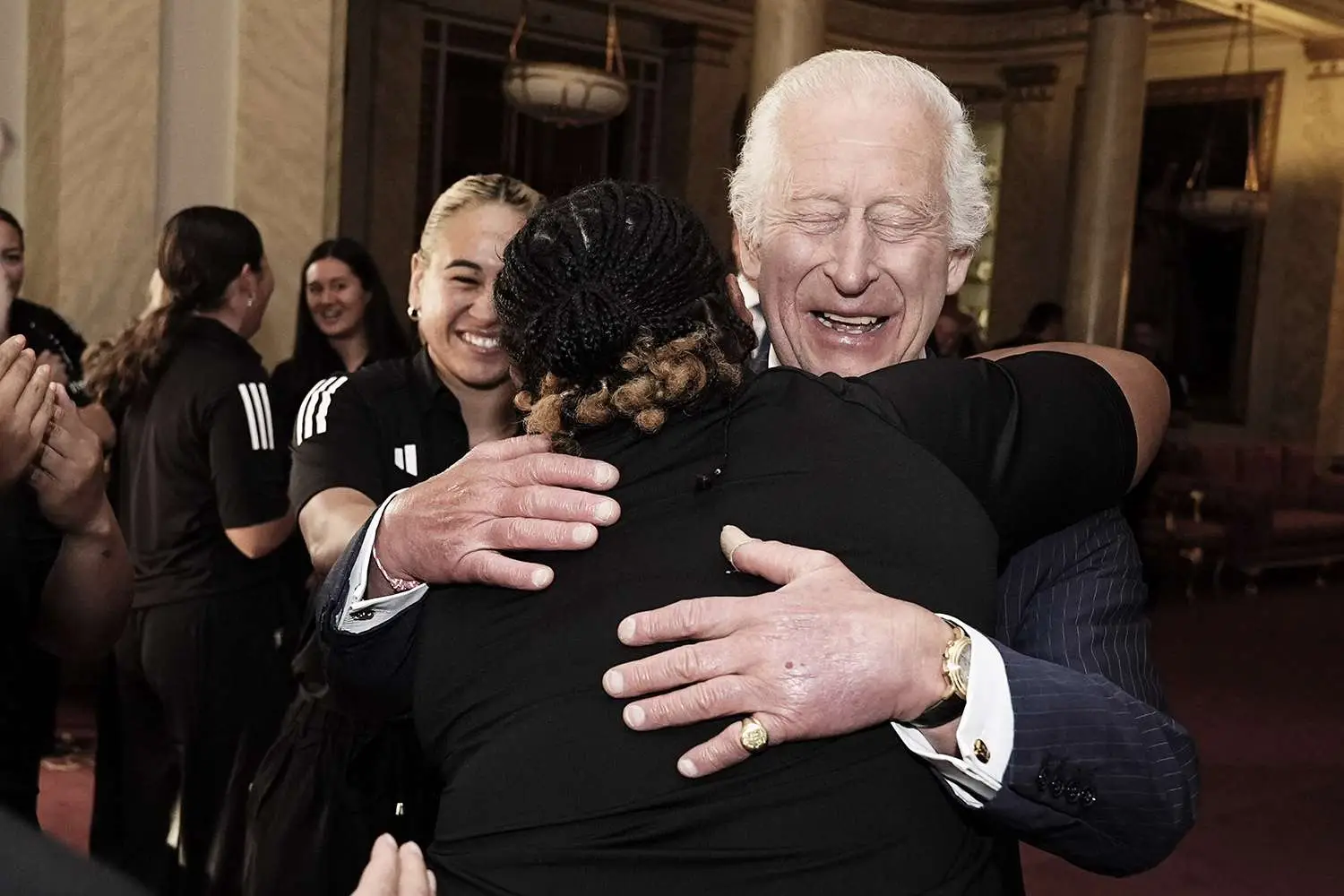
King Charles III surprised many when he accepted a spontaneous group hug from the New Zealand women’s rugby team, the Black Ferns, at Buckingham Palace Wednesday. When one of the players, Ayesha Leti-I’iga, asked playfully, “But only if it’s okay with you,” the King smiled and responded, “A hug? Why not!” The team quickly gathered around him, laughing and embracing the monarch, who later joked, “I’ve been flattened by a scrum” and described the experience as “very healing”.
This simple act of hugging goes beyond a lighthearted royal moment—it illustrates the profound impact that physical connection can have on both giver and receiver. King Charles, often seen in a more formal light, embraced a gesture that demonstrates the power of human touch, echoing many of the principles I have long held about hugs. In my work as a PAIRS Trainer, I have seen firsthand how a hug can break down emotional barriers, heal wounds, and foster deeper connections within families and communities.
The Power of a Hug
Hugs are not just physical gestures—they are profound expressions of care, comfort, and connection. A hug can communicate what words often cannot: “You are not alone,” or “I care about you.” King Charles’ comment about the hug being “healing” reflects a deeper truth about the role of touch in emotional and psychological well-being. Hugs release oxytocin, often called the “love hormone,” which can reduce stress, lower blood pressure, and create a sense of safety. They offer comfort, foster emotional bonds, and remind us of our shared humanity.
Types of Hugs and Their Meanings
In my experience, hugs come in many forms, each with its own unique emotional significance. King Charles’ embrace with the Black Ferns was more than just a physical act—it was a symbolic representation of connection, warmth, and trust. Let’s explore some common types of hugs and their impact, drawing parallels to the King’s experience.
- The Group Hug
King Charles’ encounter with the Black Ferns was a classic example of a group hug, where many individuals come together to express collective affection or joy. This type of hug can be especially powerful, as it symbolizes unity and shared emotion. In this case, it highlighted the team spirit of the rugby players and showed how even a figure as traditionally distant as the King could be enveloped in a moment of collective warmth. - The Celebratory Hug
When people are filled with joy, excitement, or pride, a celebratory hug naturally follows. While King Charles may not have been celebrating a personal achievement, the rugby team certainly was, and their excitement spilled over into their warm embrace of the monarch. This hug fosters a sense of shared joy and acknowledges the importance of human connection during moments of celebration. - The Healing Hug
King Charles described the hug as “very healing,” a powerful acknowledgment of the emotional and even physical benefits of touch. A healing hug is typically long, gentle, and full of intention. It provides reassurance, reduces anxiety, and conveys that everything will be okay. Such hugs are common in therapeutic settings, where the simple act of holding someone can offer profound comfort, as Charles experienced when surrounded by the Black Ferns. - The Reassuring Hug
Often, a hug can provide a sense of reassurance in times of uncertainty or vulnerability. Although this wasn’t necessarily the context of King Charles’ hug, his openness to the embrace likely made him feel more connected and reassured by the affection he received from the team. A reassuring hug tells us, “You are safe,” and can help build trust and reduce feelings of anxiety. - The Polite Hug
While not every hug is deeply emotional, even more formal, polite hugs can create bonds. This type of hug, often brief and light, still signals warmth and approachability. King Charles, a public figure known for his formality, broke with tradition by allowing this group hug, showing that even a royal figure can engage in meaningful human contact.
The Benefits of Hugging
Hugging is not just about comfort—it has profound psychological and physiological benefits. When we hug, our bodies release oxytocin, which promotes feelings of bonding and trust. Hugs also reduce cortisol levels, helping to lower stress and anxiety. For King Charles, this embrace wasn’t just a charming moment caught on camera—it was a moment of genuine human connection, offering both him and the rugby players the emotional benefits of shared warmth and trust.
In families, I often encourage more hugging as a way to reconnect and heal. Hugs can serve as a bridge when words fall short, especially in moments of tension or misunderstanding. They offer a way to express care, acceptance, and unconditional love. In training programs, I have seen how a simple hug can soften the hardest of hearts, open the door to reconciliation, and foster a sense of belonging. Much like King Charles experienced with the Black Ferns, hugs have the power to break down barriers and create space for mutual respect and affection.
Hugging as a Form of Healing
King Charles’ comment about the hug being “healing” is deeply significant. In a world where physical touch has become more restricted, particularly for public figures, such moments of affection are even more meaningful. Hugs can help individuals feel grounded and connected to others, providing a reminder of the importance of human touch. They can also reduce feelings of isolation, something that is particularly important for people in leadership roles, like King Charles, who are often seen as distant or untouchable.
From a therapeutic perspective, hugs have long been recognized as a tool for emotional healing. They foster connection, ease anxiety, and can even help release pent-up emotions. For King Charles, this spontaneous act likely provided not only a moment of lightheartedness but also a deeper emotional release. The group hug reminded him—and us all—that at the core of human experience is the need for connection, affection, and understanding.
Conclusion
King Charles III’s embrace with the Black Ferns was more than just a fun royal moment—it was a reminder of the profound power of human connection through touch. Hugs can heal, comfort, and create a sense of belonging, whether between a monarch and rugby players or between family members struggling to communicate. This event serves as a beautiful illustration of the universal language of love and care that a hug can express. As Charles himself said, “Why not?”—indeed, why not embrace the healing power of a hug? It has the power to transform relationships, soften formalities, and remind us of our shared humanity.
Discover more from Fatherhood Channel
Subscribe to get the latest posts sent to your email.