
In a recent New York Times column, a reader wrote to therapist Lori Gottlieb with a heartbreaking confession: he hadn’t spoken to his brother in four years over a property dispute involving their family farm. What began as a disagreement over financial fairness evolved into a rupture in the deepest soil of their relationship — and now, with aging parents and growing children, he wonders if it’s too late to heal.
Lori’s response was wise and compassionate, reminding the letter writer that reconciliation isn’t about resolution — it’s about recognition. And I couldn’t agree more.
As I read their story, I found myself thinking about the tens of thousands of families I’ve met through the PAIRS journey — from veterans healing from trauma to couples rebuilding trust, to adult siblings navigating decades of unspoken pain, and even to my own biological family. The heartbreak isn’t rare. It’s universal. And it’s so often preventable.
The Invisible Ledger
When someone in a family says, “It’s not about the money,” they’re usually telling the truth — but not the whole truth.
More often than not, these disputes aren’t really about land, inheritances, or even fairness in the literal sense. They’re about invisible ledgers — the unspoken records we keep of who was seen, who was helped, who was favored, and who felt left out.

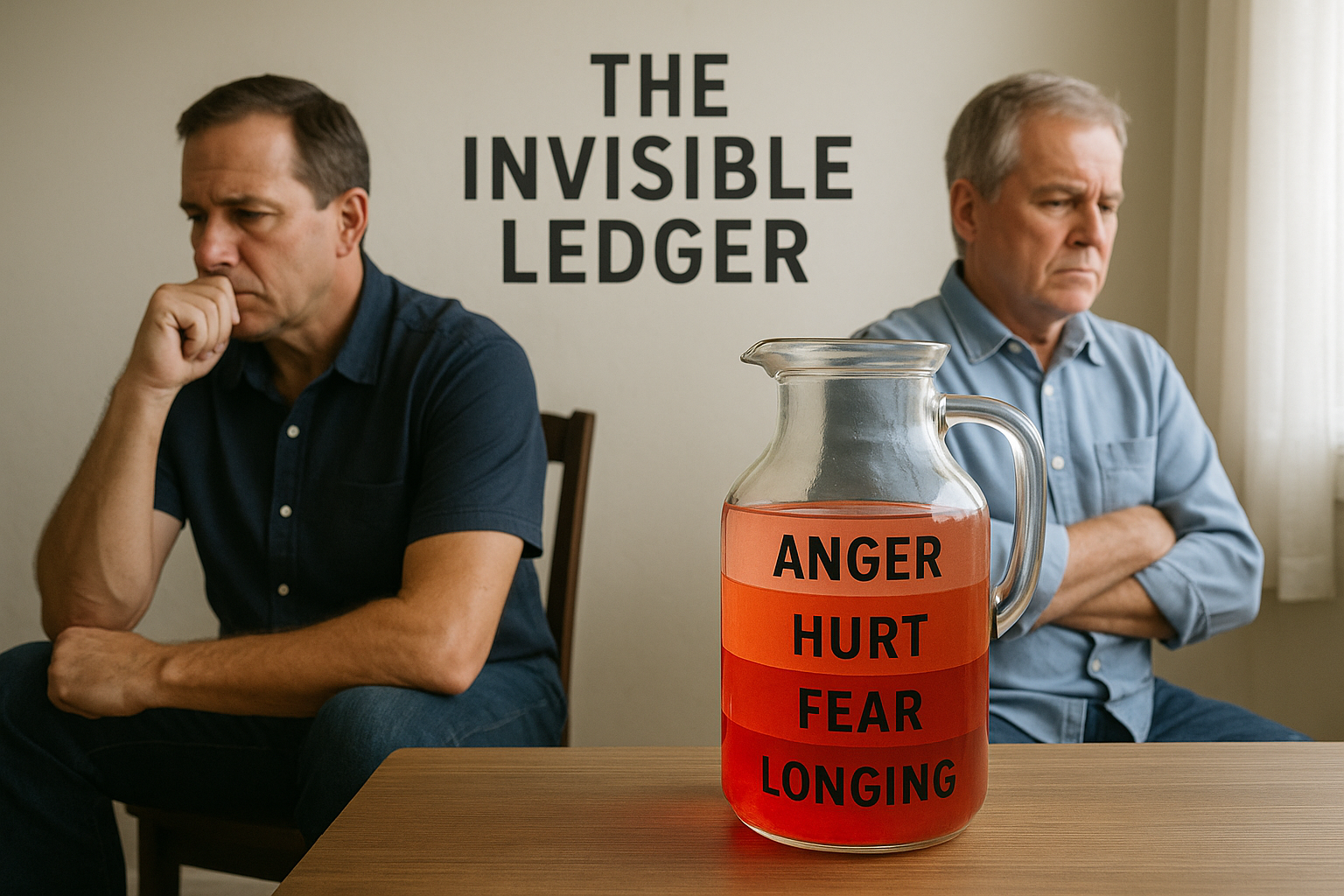
In the PAIRS Essentials course, we teach a tool called the Emotional Jug — a metaphor for the layers of emotions we all carry. At the top might be anger. Below that? Hurt. Deeper still, fear. And often, at the very bottom, unmet longing: to be known, to matter, to belong.
The brother in the article likely felt audited, not included. He wasn’t part of a conversation — he was handed a verdict. And his response wasn’t just about this one moment, but about what it echoed from the past.
Reconciliation Isn’t a Math Problem
The letter writer tried to “make things fair” by matching land value to an earlier financial gift. That’s logical. It’s tidy. But relationships aren’t tidy. We don’t love with spreadsheets. And no family ever healed by being told, “This is what’s fair — trust me.”
In PAIRS, we also teach Confiding, Fair Fight for Change, and Clarifying Expectations as foundational tools for transforming resentment into understanding. But these tools only work when we start not with our position, but with our pain. Not with our logic, but with our longing.
A better beginning might sound like:
“I miss you. I think I hurt you. I acted out of fear and didn’t ask what mattered to you. I hope we can talk again — not to fix the past, but to understand it.”
From Estrangement to Emotional Inheritance
Even if this brother never responds, the letter writer has already begun a more powerful journey: choosing not to pass down silence, shame, and grudges as his children’s inheritance. Instead, he can leave them something far more valuable: the tools to let it out, to name their hurts, to ask for what they need, and to love with eyes wide open.
That’s what we do in PAIRS. We don’t just repair relationships — we rewire what family means.
As Lori wrote, repair takes two. But healing starts with one. One voice willing to say, “I want to understand you.” One heart brave enough to feel before fixing. One choice to turn toward connection, even when the past feels frozen.
If you’re estranged from someone you love — a sibling, a parent, a child — know this: it’s never too late to take the first step. And you don’t have to take it alone.
Discover more from Fatherhood Channel
Subscribe to get the latest posts sent to your email.