
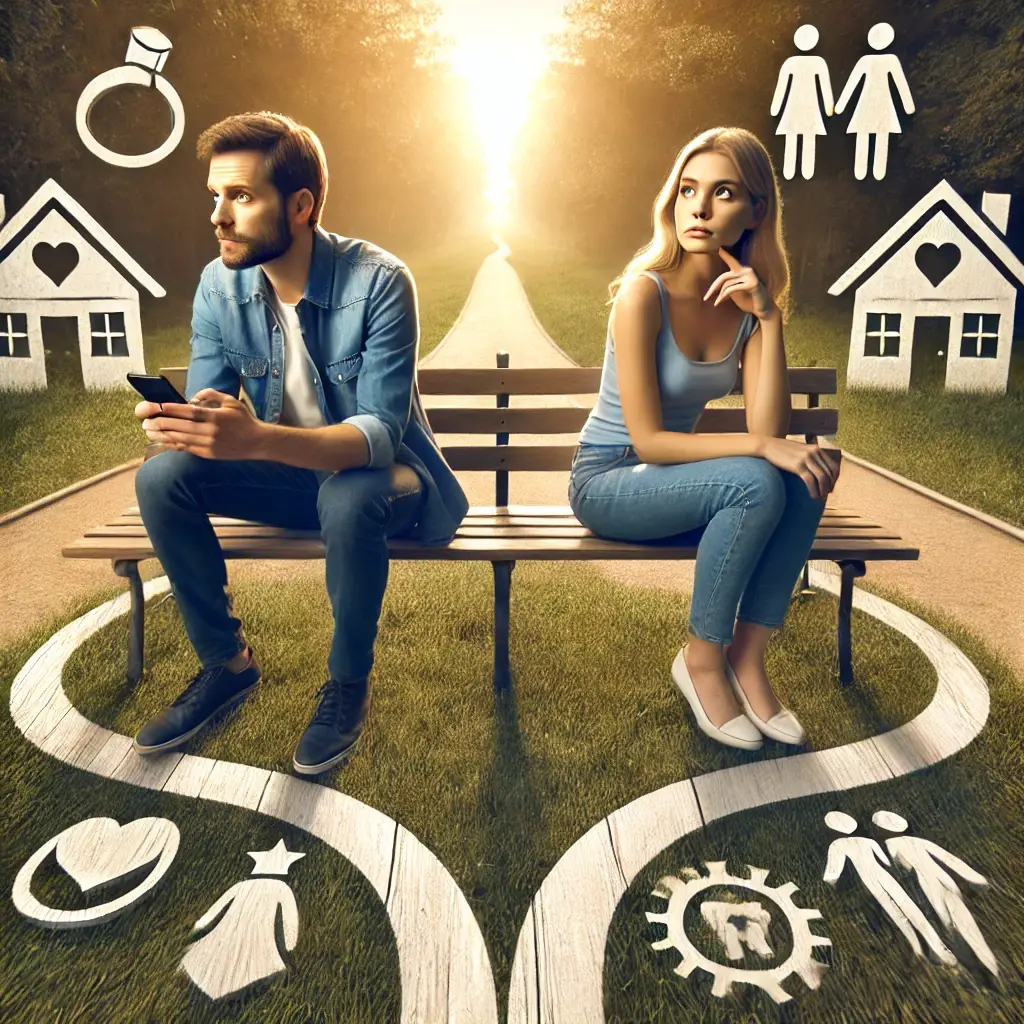
What if the way we fall in love today is completely unlike anything we’ve seen before? The world of relationships has undergone a seismic shift, transforming how we connect, stay committed, and define love itself. With technology at our fingertips, evolving societal norms, and shifting gender roles, love has more possibilities—and challenges—than ever before. The rules that once guided relationships have been rewritten, leaving us to navigate uncharted territory. This journey can feel both liberating and overwhelming.
Think about it: Nearly 40% of U.S. adults no longer believe marriage is essential for a fulfilling life. What was once a societal cornerstone—getting married, settling down, raising a family—has become just one of many options. Long-term partnerships, cohabitation, and even polyamorous relationships are on the rise, reflecting a new era where love is no longer confined by traditional expectations.
At the same time, technology has revolutionized how we meet, talk, and stay connected. Dating apps have become the new matchmakers, and while they make it easier to find potential partners, they also introduce new complexities. Many people experience the “paradox of choice”—the more options we have, the harder it is to commit to just one person. How many of us have wondered, “Is there someone better out there?” after just a swipe?
For couples like Sarah and Mike, who met on a dating app, this abundance of choice can actually hinder meaningful connection. After months of on-and-off texting, both realized they were more focused on the possibilities than on truly building a relationship. Only when they made a conscious decision to stop swiping and start connecting did their relationship begin to grow.
It’s not just technology complicating modern love. Societal shifts, such as the declining emphasis on traditional marriage and the rise of diverse family structures, are reshaping the way we think about relationships. Gone are the days when the “nuclear family” was the dominant model. Today, more couples are choosing to cohabit, raise children outside of marriage, or build blended and chosen families. These changes can be thrilling, offering more freedom and flexibility, but they also bring uncertainty. How do we know which path is right for us?
At the heart of this new landscape lies a deeper desire for emotional fulfillment. Where previous generations may have stayed together out of obligation, we now expect our relationships to provide personal growth and satisfaction. But with this expectation comes pressure. We’re no longer looking for just a partner—we’re searching for someone who understands our emotional needs and helps us become our best selves. Yet, with that deeper desire comes a fear: What if I can’t find that person?
As we continue to navigate these complexities, it’s crucial to remember that modern love is less about following a prescribed path and more about creating a relationship that works for you. Whether you choose to marry, cohabit, or craft your own definition of family, what matters most is clear communication and a shared vision for the future.
This article is based on insights from Seth Eisenberg’s upcoming book, The Dynamics of Modern Relationships, coming this year. The book delves into how technology, societal changes, and evolving gender roles impact our relationships, providing tools for emotional intelligence, conflict resolution, and intimacy-building to help couples thrive in today’s ever-changing world.
Discover more from Fatherhood Channel
Subscribe to get the latest posts sent to your email.