
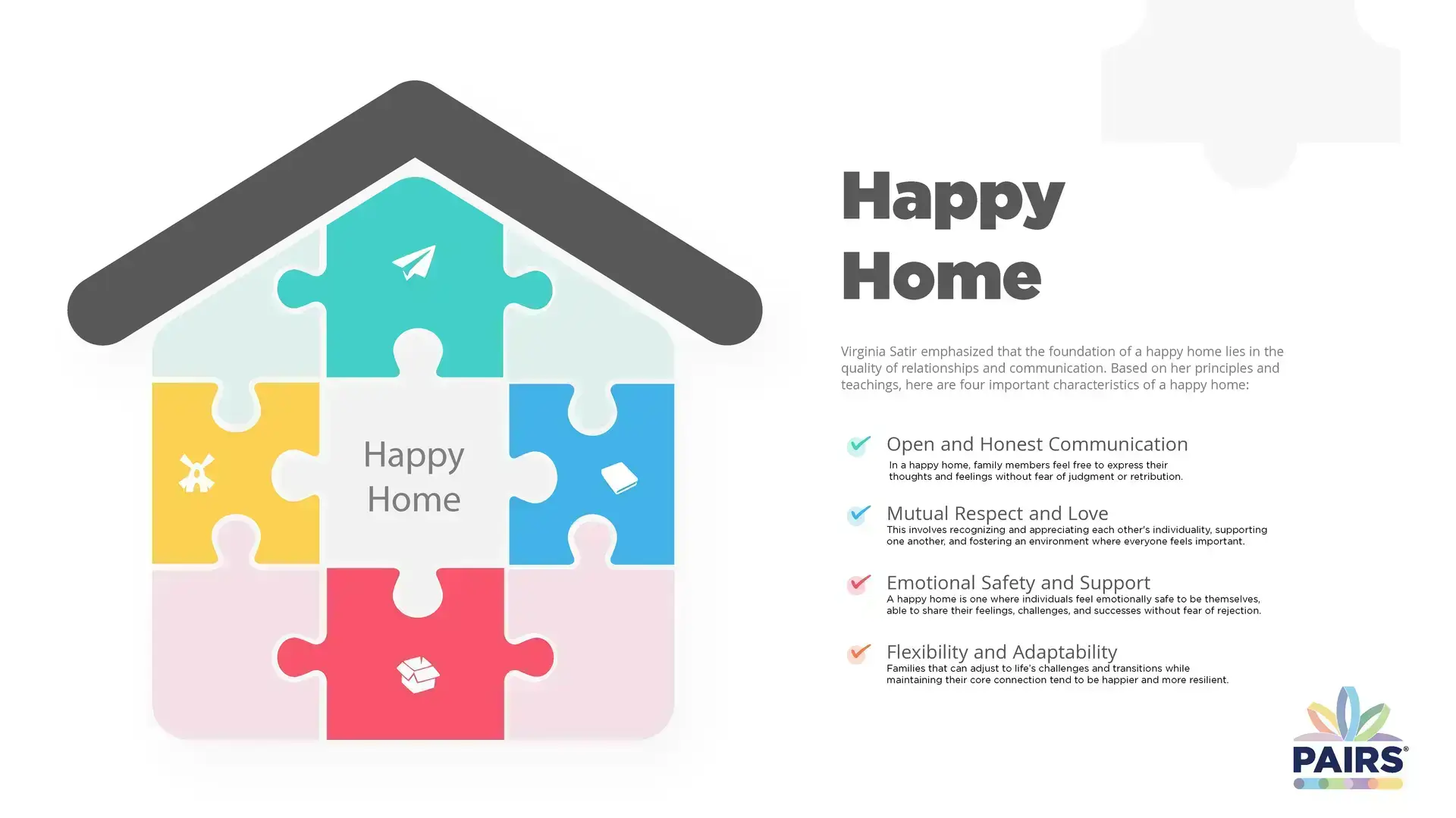
In the journey of parenting, creating a happy home is a goal that resonates deeply with every family. But what truly makes a home happy? Drawing from the timeless wisdom of renowned family therapist Virginia Satir, we explore four essential qualities that form the foundation of a joyful and resilient family life. These pillars—open communication, mutual respect, emotional safety, and adaptability—can transform any household into a sanctuary of love and connection.
1. Open and Honest Communication: The Lifeblood of Connection
Imagine a home where every voice is heard, where thoughts and feelings are shared freely, and where misunderstandings are addressed with care. This is the power of open communication. Satir, often referred to as the “mother of family therapy,” believed that clear, direct, and respectful communication is the lifeblood of any healthy relationship. In a happy home, family members feel safe to express themselves without fear of judgment or retaliation.
When parents model this kind of communication, they teach their children how to articulate their needs and listen to others. Whether it’s discussing daily experiences around the dinner table or resolving conflicts with kindness, open communication builds trust and strengthens family bonds.
2. Mutual Respect and Love: The Heartbeat of a Happy Home
At the core of a happy home is a deep sense of mutual respect and love. Satir emphasized the importance of recognizing and honoring each family member’s individuality. This means seeing each person as valuable, worthy of love, and deserving of respect. In a home filled with mutual respect, everyone feels important and appreciated, creating an atmosphere where love can flourish.
Parents who practice and teach respect are laying the groundwork for their children to grow into empathetic, considerate adults. By showing appreciation for each other’s strengths and acknowledging differences with kindness, families can nurture an environment where love is the natural response to daily interactions.
3. Emotional Safety and Support: The Bedrock of Trust
A happy home is a safe haven, where individuals feel emotionally secure enough to be their true selves. Satir believed that emotional safety is crucial for healthy development and strong relationships. When family members feel safe to express their feelings, share their fears, and celebrate their successes, they build deeper connections with one another.
Creating emotional safety involves more than just providing comfort; it’s about cultivating an environment where vulnerability is welcomed. This means listening without judgment, offering support without conditions, and celebrating each family member’s uniqueness. When emotional safety is a priority, trust grows, and families become more resilient in the face of challenges.
4. Flexibility and Adaptability: The Strength of Resilience
Life is full of surprises, and the ability to adapt is key to maintaining harmony at home. Satir highlighted the importance of flexibility and adaptability within families. A happy home is one that can bend without breaking, adjusting to life’s inevitable changes while maintaining its core values and connections.
This adaptability can be seen in how families handle everything from daily routines to major life transitions. Whether it’s shifting roles within the family, adjusting to a new school, or navigating the ups and downs of parenting, flexibility allows families to face challenges together and emerge stronger. By embracing change as a part of life, families not only survive but thrive.
Conclusion: Building a Legacy of Happiness
Virginia Satir’s insights into family dynamics offer a blueprint for creating a happy home. By prioritizing open communication, mutual respect, emotional safety, and adaptability, parents can build a home where every member feels valued, supported, and loved. These qualities not only strengthen family bonds but also lay the foundation for children to grow into confident, compassionate individuals.
As parents, the greatest gift we can give our children is a home filled with love, understanding, and the freedom to be themselves. By embracing these four pillars, we can create a legacy of happiness that will endure for generations to come.
Discover more from Fatherhood Channel
Subscribe to get the latest posts sent to your email.