
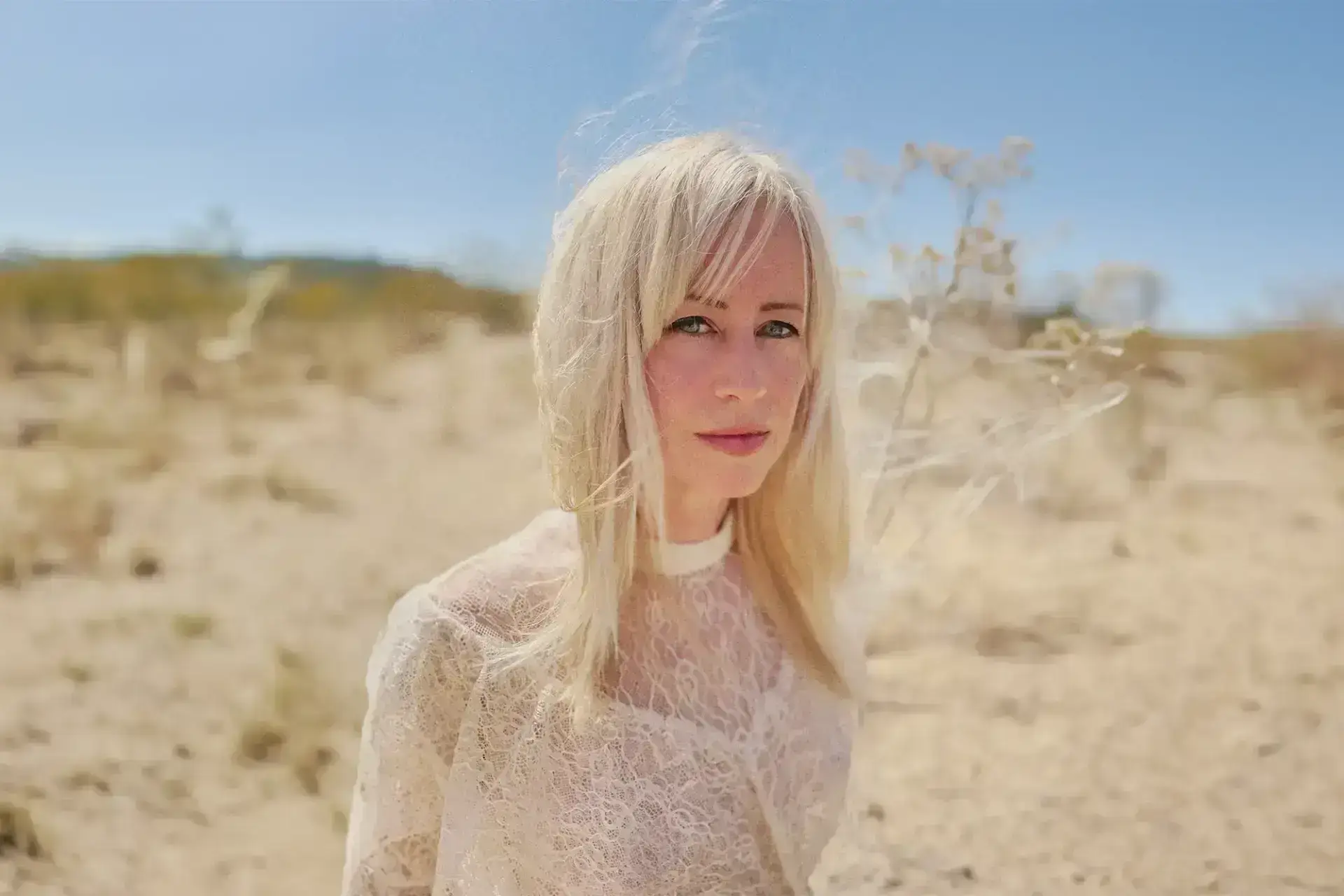
Orenda Fink’s memoir, The Witch’s Daughter: My Mother, Her Magic, and the Madness That Bound Us, is a compelling work that transcends the conventional boundaries of the memoir genre, weaving together the strands of personal history, psychological depth, and the relentless pursuit of healing. In this narrative, Fink, known widely for her ethereal music with the indie duo Azure Ray, peels back the layers of her public persona to reveal a hauntingly intimate portrait of her childhood and the enduring scars left by her mother’s mental illness and addiction.
Fink grew up in rural Alabama, a place where the oppressive heat was matched only by the intensity of her mother’s unpredictable moods. Her mother, whom Fink describes with a mix of fear and reverence, was a woman trapped in the grips of borderline personality disorder and alcoholism. Yet, to the young Orenda, her mother’s erratic behavior was not merely a sign of illness; it was an otherworldly force, a kind of dark magic that shaped the fabric of her existence.
In the memoir, Fink recounts the eerie rituals and strange occurrences that filled her childhood home—a place where reality and fantasy were often indistinguishable. There were bottles of blood hidden in closets, drunken outbursts attributed to ghosts, and a constant undercurrent of fear that permeated the household. As a child, Fink internalized these experiences not as signs of a troubled mind but as manifestations of her mother’s mystical powers. “From a child’s perspective, you don’t think your mother’s crazy. You think she’s a God,” Fink writes, capturing the duality of love and terror that defined her early years.
The narrative is rich with the kind of sensory detail that pulls the reader into Fink’s world, a world where the lines between love and manipulation, magic and madness, were often blurred. Her mother’s influence was all-encompassing, and Fink, nicknamed “Little Magic,” became a willing participant in the strange and sometimes frightening reality her mother created. This dynamic, both captivating and tragic, forms the emotional core of the memoir.
As Fink moved into adulthood, her mother’s shadow continued to loom large over her life. Even as she found success in the music world, first in Athens, Georgia, and later in Omaha, Nebraska, her mother’s influence remained a constant, if often unwelcome, presence. The success of Azure Ray offered her a sense of identity and escape, yet it also served as a reminder of the complex relationship she could never fully outrun.
It wasn’t until the death of her dog, Wilson, that Fink’s carefully constructed facade began to crack. The grief she felt over Wilson’s death was a catalyst, triggering a profound emotional collapse that led her to seek therapy for the first time. What began as a way to process her grief soon evolved into a deeper exploration of the unresolved trauma from her childhood. Therapy became a lifeline, a space where Fink could begin to untangle the web of her past, to separate the love she felt for her mother from the pain her mother had caused.
The writing of the memoir was both an act of creation and an act of exorcism. As Fink sifted through her memories, she began to see her mother not as a figure of dark magic, but as a woman deeply troubled by her own demons. This shift in perspective was painful but necessary, allowing Fink to confront the reality of her mother’s illness without the comforting, if illusory, veil of mysticism. The process of writing was long and fraught, filled with moments of doubt and fear. But it was also transformative, giving Fink the strength to eventually make the difficult decision to go no contact with her parents, a move she describes as essential for her own mental health and well-being.
Fink’s story is not just a personal narrative; it is a profound exploration of the ways in which we are shaped by our parents, for better or worse. Her memoir joins a tradition of literary works that confront the legacies of family trauma with both brutal honesty and deep compassion. In the vein of Mary Karr’s The Liars’ Club, Jeanette Walls’ The Glass Castle, and Cheryl Strayed’s Wild, Fink’s memoir is a testament to the power of storytelling as a means of reclaiming one’s life from the shadows of the past.
These authors, much like Fink, have navigated the murky waters of childhood trauma, using their writing as a way to make sense of their experiences and to find a path towards healing. Mary Karr’s portrayal of her dysfunctional family life in East Texas, marked by her mother’s mental instability and her father’s hard-drinking ways, was groundbreaking in its rawness and candor. Jeanette Walls, in The Glass Castle, similarly captures the contradictions of growing up with parents who were both brilliant and deeply flawed, offering a nuanced portrayal of love and neglect. Cheryl Strayed’s Wild, though centered on her solo hike along the Pacific Crest Trail, is also a journey through grief, loss, and the search for self-understanding.
Orenda Fink’s memoir stands on the shoulders of these literary giants, but it also carves out its own unique space in the genre. Fink’s voice is lyrical and introspective, reflecting her background as a musician, yet it is also unflinchingly honest, revealing the depths of her pain and the arduous process of healing. The memoir is not just about the past; it is about the ongoing work of self-discovery and the courage it takes to break free from the patterns of the past.
For readers, particularly those who are parents, Fink’s story offers valuable insights into the complexities of parent-child relationships and the long-lasting impact they can have. It is a reminder that while we may inherit certain patterns of behavior from our parents, we also have the power to change those patterns and forge our own paths. Fink’s memoir is a powerful exploration of this process, showing that healing is not just about letting go of the past, but about understanding it, confronting it, and ultimately, transcending it.
The Witch’s Daughter: My Mother, Her Magic, and the Madness That Bound Us is a memoir that resonates on multiple levels. It is a deeply personal story, but it also speaks to universal themes of love, trauma, and resilience. It is a must-read for anyone interested in understanding the complexities of familial relationships and the journey towards self-discovery. Orenda Fink has given us a gift with this memoir—a story that encourages us all to look within and find the strength to break free from the past, to unbind ourselves from the spells that have held us captive, and to step into the light of our own truth.
Discover more from Fatherhood Channel
Subscribe to get the latest posts sent to your email.


